

Nearly one in two students entering second grade reads less than 50 words per minute, the grade-level expectation. And one in five falls far below that expectation, reading less than 25 words per minute. These results raise questions about the effectiveness of current reading instruction methods employed in France.
The Formalect survey, conducted in 2021 on a large representative sample of first-grade classes, sought to address the following questions: What teaching methods for learning to read are currently employed in France at the beginning of first grade? And what is the impact of these different teaching methods on students’ reading skills?
The purpose of this note is to provide a synthetic answer to these two questions. The findings of the Formalect survey show that implementing a strict synthetic phonics method — that is to say, a method focused on teaching the code of graphemephoneme correspondences, without any accompanying memorization activities or global recognition of non-decodable words — is more effective for the acquisition of good fluency and reading comprehension. The difference in effectiveness becomes apparent as early as January of first grade and persists through September of second grade. The discrepancy is even more pronounced for students with weak pre-reading skills at the beginning of first grade, and for those attending schools from low-income backgrounds.
Given that this strict synthetic phonics method is currently rarely employed in classes, there is a significant scope for progress in reading instruction in France.
Text written by Paul Gioia and Jérôme Deauvieau
On the same topic
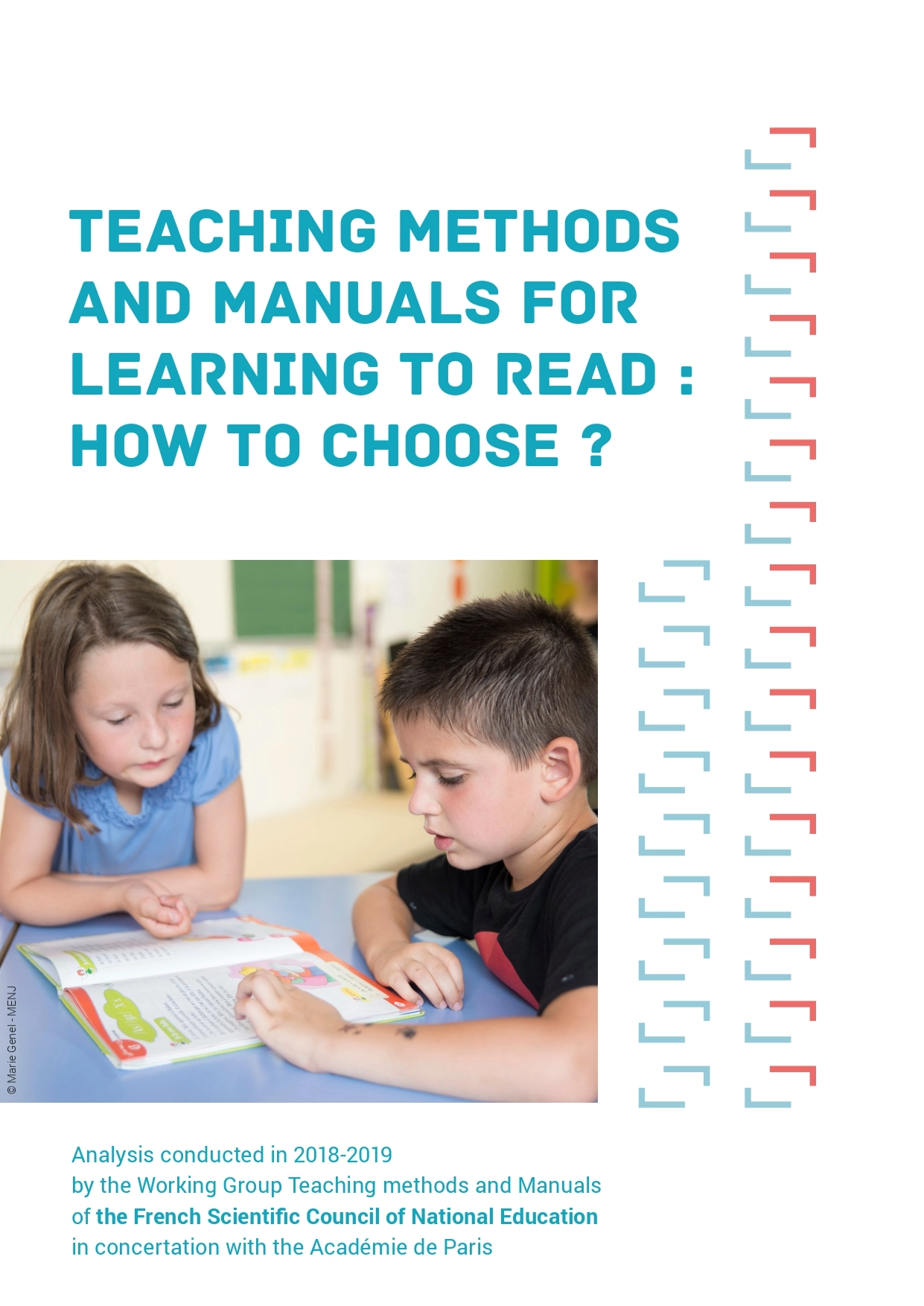
Teaching methods and manuals for learning to read: How to choose?
Summary of research and recommendations - English translation
Sur la même thématique

Améliorer l'efficacité de l'enseignement de la lecture - Jérôme Deauvieau & Isabelle Goubier
Forum Education - 30 septembre 2026
Les enjeux liés à l'enseignement de la rhétorique - Alain Brunn & Pierre Chiron
Forum Education - 30 septembre 2026

À la Une ! Pourquoi et comment faciliter l'acquisition de l'orthographe ?
Lettre Le Passeur n°21 - Juin 2026